Published
Several supplier invoices in one GB freight consignment
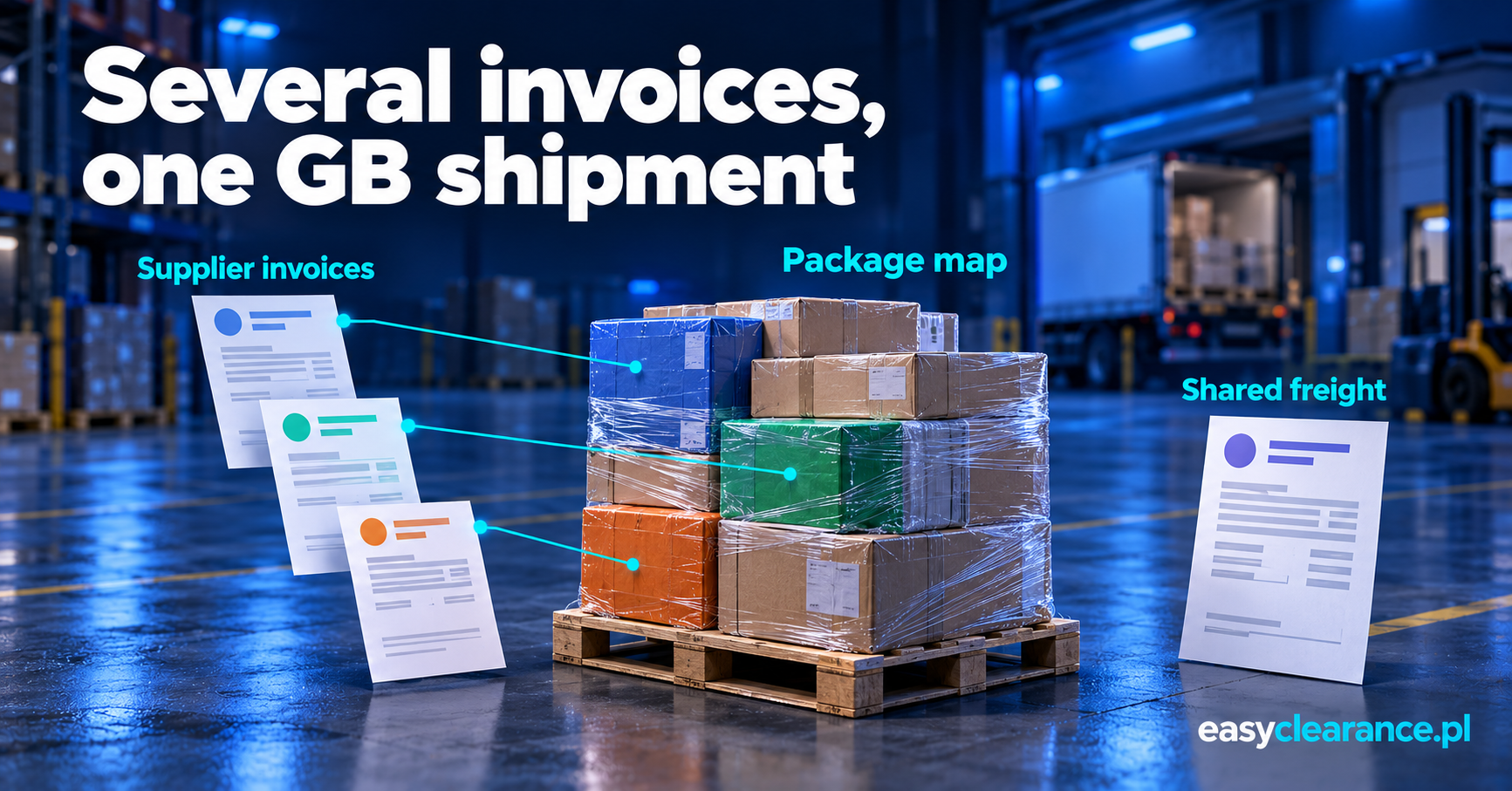
When you need customs documents for multiple invoices in one shipment to Great Britain, start by connecting every invoice line to the goods actually travelling. A pallet label or a combined purchase total cannot explain which supplier sold each product, which quantity was loaded, or which transport charges are already included. Prepare a reconciliation sheet alongside the original documents before asking the customs agent to assess the declaration arrangement.
This guide addresses one GB business buying goods from several suppliers for a consolidated freight movement. If several importers share the same vehicle, identify their consignments separately and ask the appointed parties how each will be handled.
Start with a shipment index, not a replacement invoice
Imagine a GB retailer buys shelving from one EU supplier and display fittings from another. A collection warehouse puts both orders on the same pallet. Each supplier has issued its own invoice, while the carrier sends one transport bill. This is an illustrative scenario, not a client case.
Create an index listing the supplier, invoice number and date, purchase order, currency, delivery terms and goods included in the movement. Keep the suppliers' invoices intact. The index explains how the documents fit together; it does not create a new sale or replace evidence of the original transactions.
HMRC's transaction-value guidance describes the seller's invoice or payment-request document as evidence where it is authentic and adequately establishes the amount paid or payable. Whether Method 1 applies needs to be checked against the transaction.
Map invoice lines to packages
Give each reconciliation row a stable reference, such as supplier A, invoice A123, line 2. Add the product description, quantity shipped, unit of measure, package identifier and supporting classification or origin information. Use separate rows where the facts differ, even when products share a marketing description.
For the example pallet, the sheet might identify cartons 1–3 as shelving from invoice A123 and cartons 4–5 as fittings from invoice B456. If a carton contains both orders, show each product's quantity within that carton. Record the outer pallet once so the same packaging is not counted twice.
Do not copy the full order quantity when only part of an invoice is shipping. Add a shipped-quantity column and explain the balance remaining at the supplier. The agent should be able to follow a row back to its invoice and forward to its physical package without guessing.
Explain shared freight and different delivery terms
Check each supplier's delivery terms before combining values. One invoice may include transport to the collection warehouse, while another excludes it. A separate carrier bill may cover collection, consolidation and delivery to the GB warehouse.
HMRC says relevant transport, insurance, loading and handling to the UK border belong in customs value unless already included. Its delivery-cost guidance explains the treatment of onward UK costs and supporting evidence. Give the agent the actual invoices and route breakdown rather than deducting a guessed UK leg.
Where a shared charge needs allocating, provide the carrier's breakdown or explain the proposed basis for review. Make sure the allocated amounts reconcile to the charge. Do not add the whole freight bill to every supplier invoice or omit it because the goods were packed together. Keep different currencies identifiable rather than silently turning them into one unsupported total.
Document checklist before handover
- Every supplier invoice, including applicable corrections or credit notes.
- A shipment index and invoice-line-to-package reconciliation sheet.
- Packing information showing the quantities actually loaded and outer package totals.
- Transport booking and relevant consignment document.
- Freight, insurance and handling invoices, with any available route breakdown.
- The GB importer's legal details, GB EORI and relevant VAT information.
- Product specifications and origin evidence where relevant to the proposed treatment.
- Written instructions identifying the requested work and agreed representation.
These are practical handover checks, not a universal list of statutory attachments. Ask the agent about goods-specific requirements and unresolved document differences before dispatch. HMRC requires written representation instructions; appointing an agent also leaves the trader responsible for due diligence.
Questions about consolidated supplier invoices
Does one pallet mean one customs declaration?
Do not decide the declaration count from packaging alone. Send the transaction and goods details so the agent can assess the arrangement. The reconciliation sheet is useful whichever declaration structure is appropriate.
Can I send only a spreadsheet with the combined total?
Send the underlying invoices too. A spreadsheet helps explain the movement but cannot resolve an unclear sale, missing supplier evidence or inconsistent value by itself.
What if one supplier changes its invoice after loading?
Send the revised document with a clear explanation of the changed lines. Identify which packages are affected and whether a declaration has already been submitted. Ask the responsible declarant what action is needed; do not circulate conflicting versions without explanation.
Prepare the pack for a route-qualified enquiry
Use the HMRC guidance linked above to check the applicable valuation and representation requirements, and ask the appointed agent which packing information is needed for this shipment. For this movement, contact Easy Clearance with the goods, supplier count, importer, route and planned date. Ask whether the requested GB work can be accepted and which information is still needed.
This is general operational information, not an assessment of an individual shipment. Official guidance checked on 3 October 2026.